Education Zone | All kinds of general educational insights and modern information

Klcs Education Station
A prime number is a natural number greater than 1 that has exactly two positive divisors: 1 and itself. Numbers that have more than two divisors are called composite numbers The number 1 is neither a prime nor composite. All primes are odd, except for 2. Prime Numbers - Prime numbers are those numbers that have only two factors, i.e., 1 and the number itself. For example, 2, 3, 7, 11, and so on are prime numbers. For example, among the numbers 1 through 6, the numbers 2, 3, and 5 are the prime numbers, [6] as there are no other numbers that divide them evenly (without a remainder). 1 is not prime, as it is specifically excluded in the definition. 4 = 2 × 2 and 6 = 2 × 3 are both composite. Understand what prime numbers are with definitions, properties, and examples. Explore lists, types, and tips to master them. Start learning now! Klcs Education Station, , , , , , , 0, KLCS Events | An L.A. PBS Station, klcs.org, 0 x 0, jpg, A prime number is a natural number greater than 1 that has exactly two positive divisors: 1 and itself. Numbers that have more than two divisors are called composite numbers The number 1 is neither a prime nor composite. All primes are odd, except for 2. Prime Numbers - Prime numbers are those numbers that have only two factors, i.e., 1 and the number itself. For example, 2, 3, 7, 11, and so on are prime numbers. For example, among the numbers 1 through 6, the numbers 2, 3, and 5 are the prime numbers, [6] as there are no other numbers that divide them evenly (without a remainder). 1 is not prime, as it is specifically excluded in the definition. 4 = 2 × 2 and 6 = 2 × 3 are both composite. Understand what prime numbers are with definitions, properties, and examples. Explore lists, types, and tips to master them. Start learning now!, 20, klcs-education-station, Education Zone
Learn what a prime number is and see how to tell if a number is prime. Get a list of primes under 100 and 1000. In this article, you will learn the meaning and definition of prime numbers, their history, properties, list of prime numbers from 1 to 1000, chart, differences between prime numbers and composite numbers, how to find the prime numbers using formulas, along with video lesson and examples. Prime numbers are natural numbers greater than 1, having exactly two factors, 1 and the number itself. It can also be defined as a whole number that can’t be exactly divided by anything except 1 and itself.

KLCS Events | An L.A. PBS Station
Source: klcs.org

Source: klcs.org

Source: klcs.org

Source: klcs.org

Donate to KLCS with your phone | An L.A. PBS Station
Source: klcs.org

Source: klcs.org
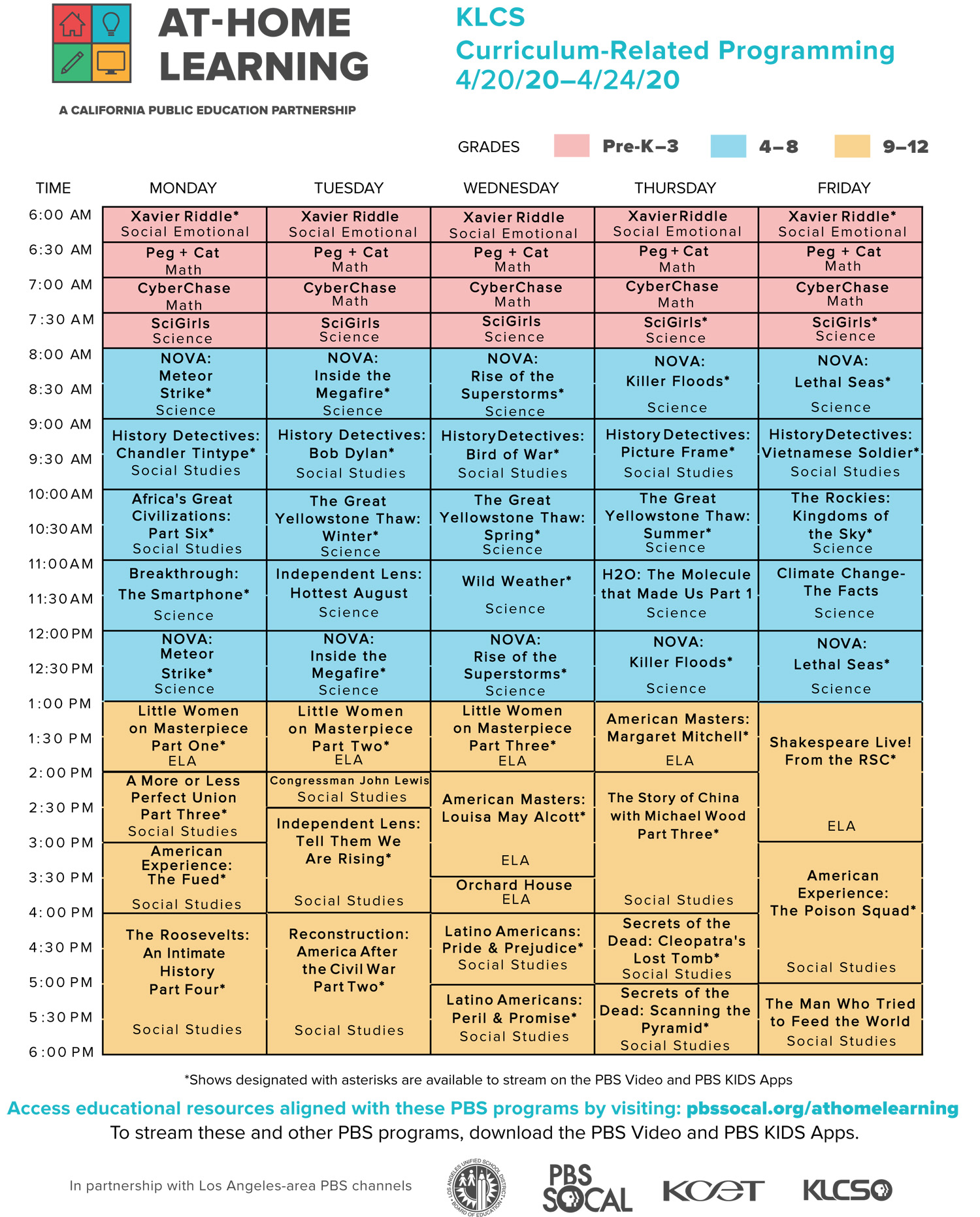
Find KLCS | An L.A. PBS Station
Source: klcs.org

Source: klcs.org

Source: klcs.org

Chapter 11 Postsecondary Education Admissions - YouTube
Source: www.youtube.com

Source: klcs.org

Source: klcs.org

ITV Schedule | An L.A. PBS Station
Source: klcs.org

Source: klcs.org

From the General Manager | An L.A. PBS Station
Source: klcs.org

Source: klcs.org
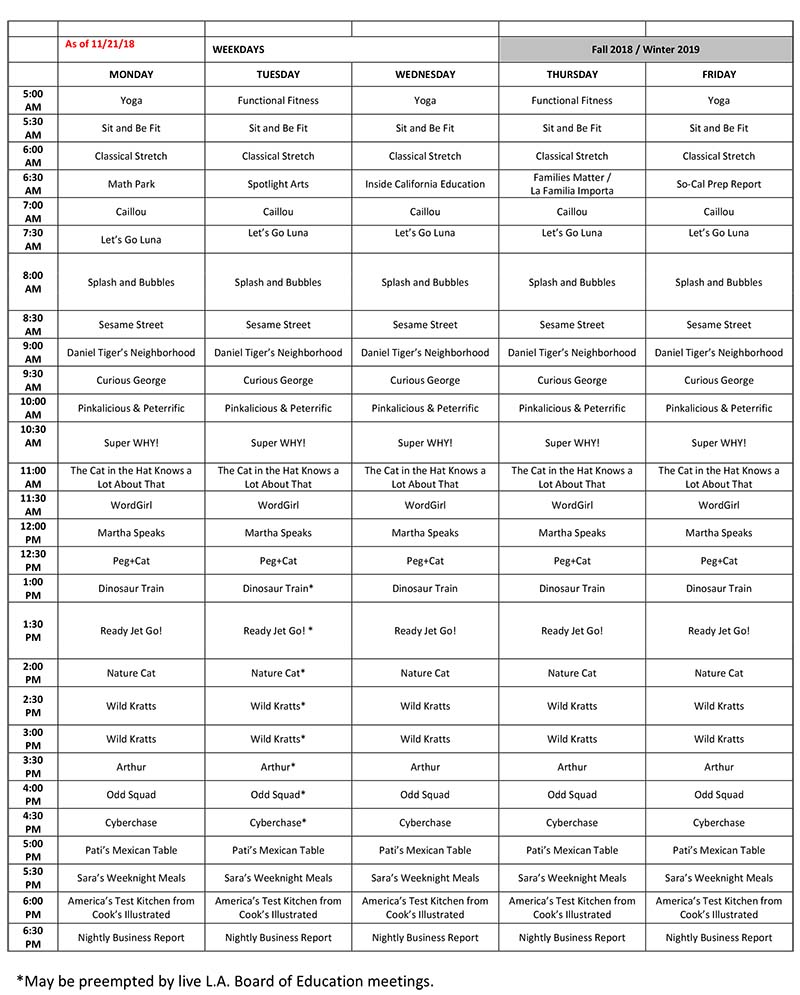
ITV Schedule | An L.A. PBS Station
Source: klcs.org
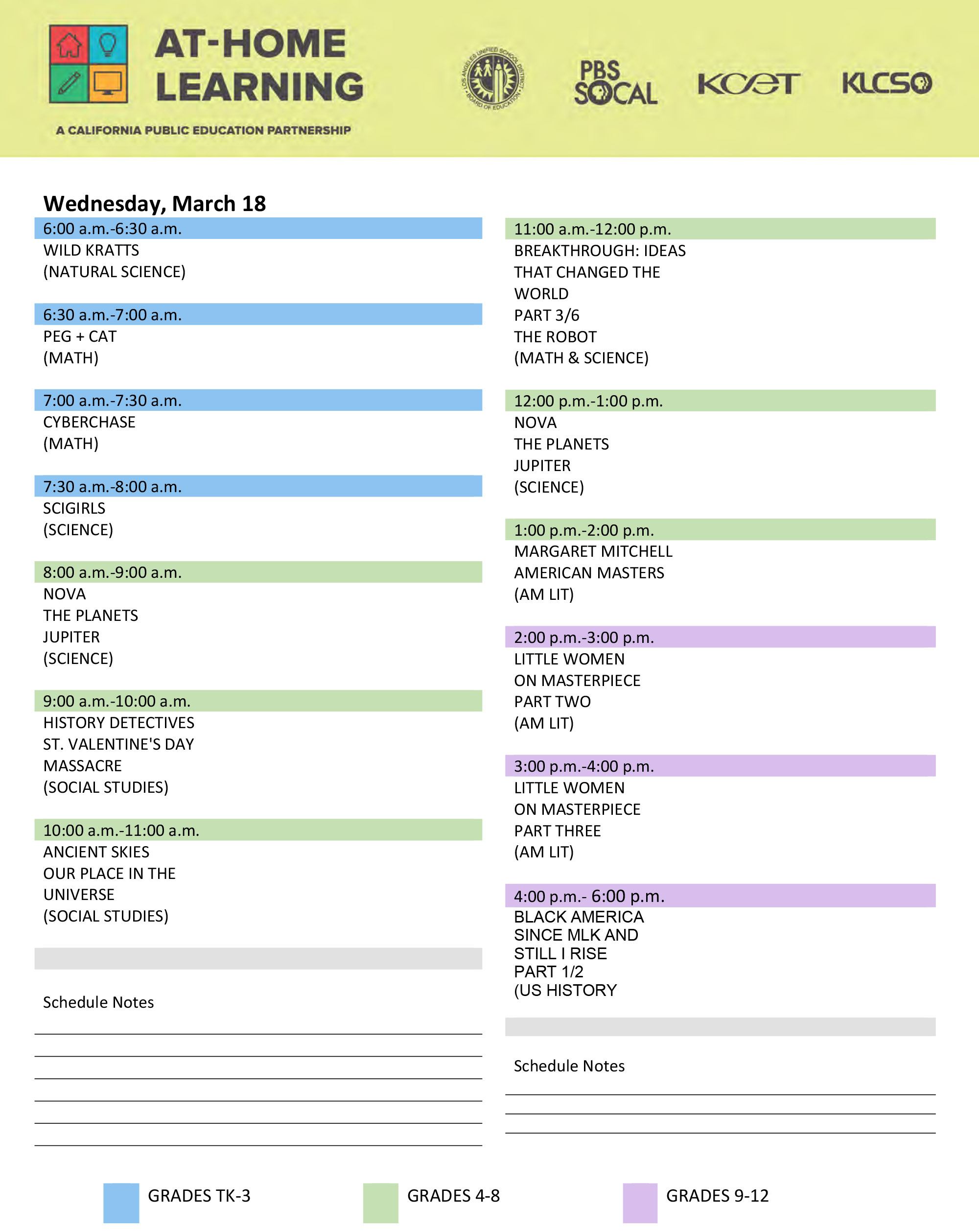
Donate to KLCS with your phone | An L.A. PBS Station
Source: klcs.org

LAUSD News | An L.A. PBS Station
Source: klcs.org

Source: klcs.org
Klcs Education Station
In this article, you will learn the meaning and definition of prime numbers, their history, properties, list of prime numbers from 1 to 1000, chart, differences between prime numbers and composite numbers, how to find the prime numbers using formulas, along with video lesson and examples. Prime numbers are natural numbers greater than 1, having exactly two factors, 1 and the number itself. It can also be defined as a whole number that can’t be exactly divided by anything except 1 and itself. A prime number is a natural number greater than 1 which has only two factors, 1 & the number itself. Learn the definition, examples, lists, facts, & more. A prime number (or prime) is a natural number greater than 1 that has no positive divisors other than 1 and itself. By Euclid's theorem, there are an infinite number of prime numbers. The prime numbers between 1 and 50 are: 2, 3, 5, 7, 11, 13, 17, 19, 23, 29, 31, 37, 41, 43, 47 **Examples of Prime Numbers** * 2 is a prime number because it can only be divided by itself and 1 without a remainder. * 3 is a prime number because it can only be divided by itself and 1 without a remainder. * 5 is a prime number because it can only ...